
Robotic Telesurgery

Robotic telesurgery is now a reality

 Advanced robotic surgery closer to you.

By 2026, telesurgery has become a reality through a project that brings together medical expertise, technology, and hospital equipment, ensuring that distance is no longer a barrier to certain urological procedures
Innovation designed with the patient in mind

It's not the distance that matters. What matters is how it changes things for you.

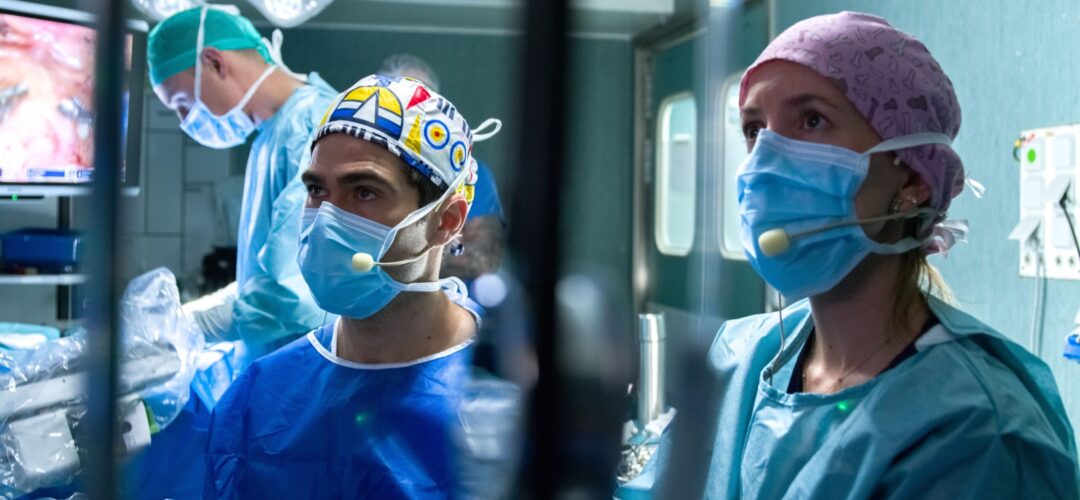
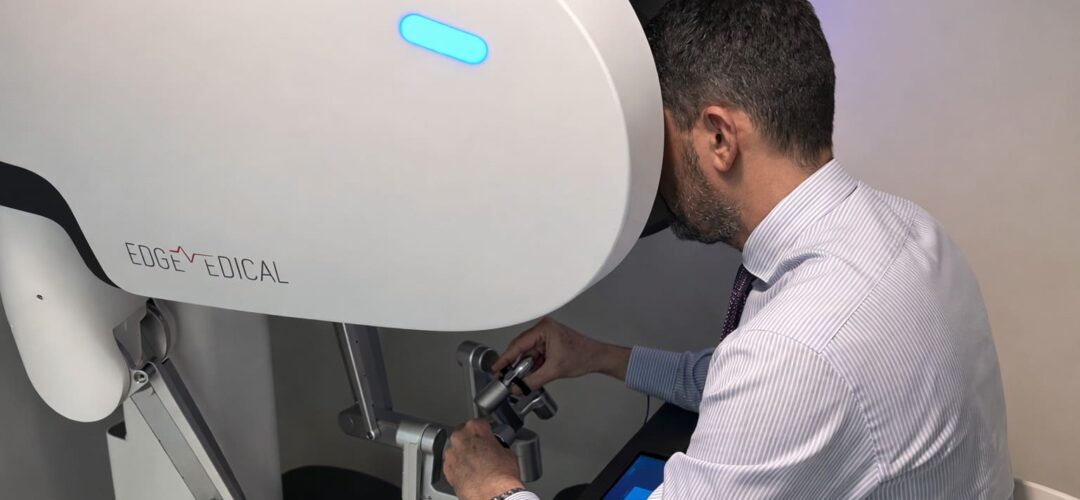
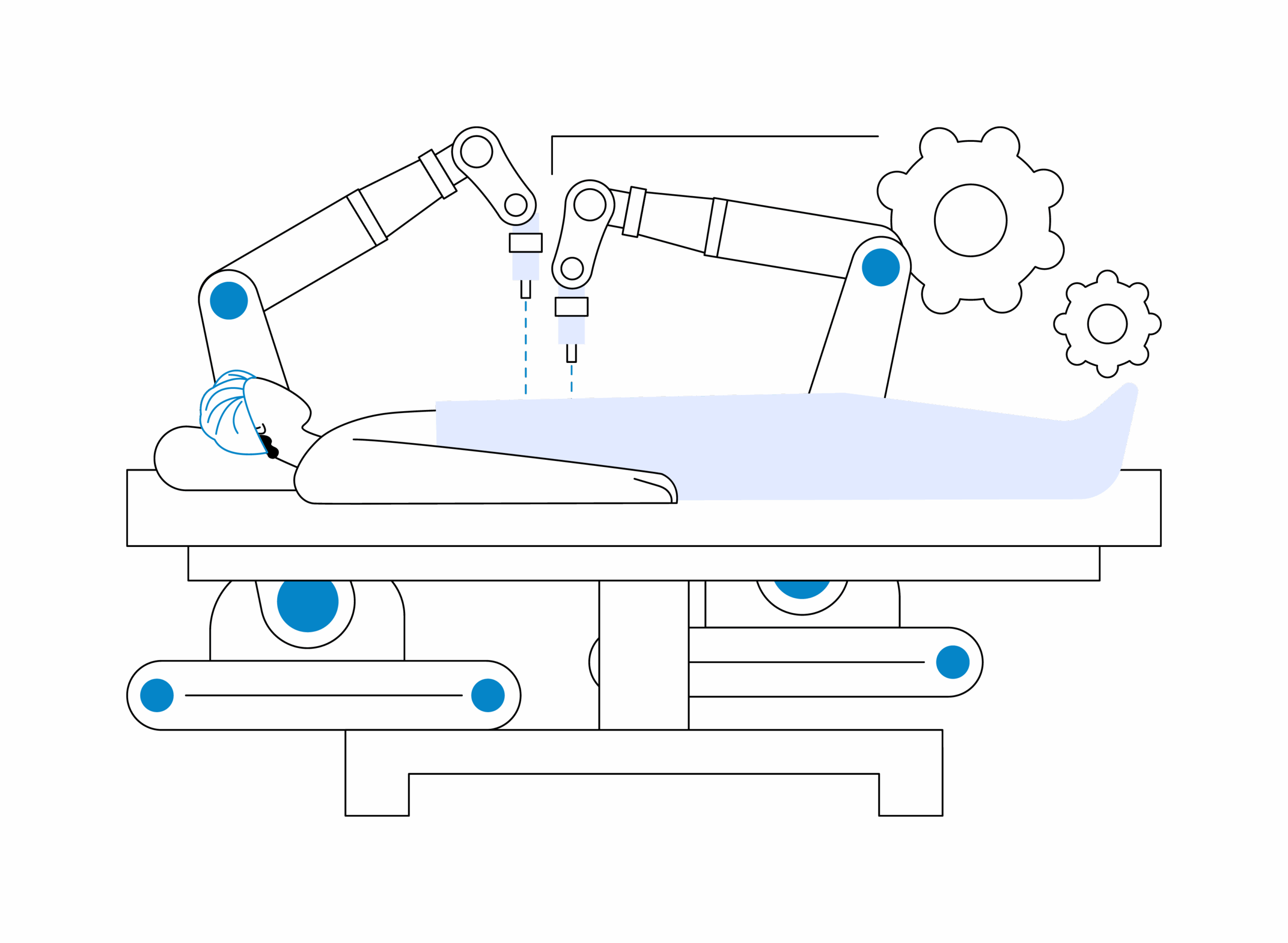
Telesurgery allows a surgeon and a medical team to connect in real time to perform certain procedures using robotic surgery, even if they are in different locations. The technology does not replace the team caring for the patient; it enhances their work.

  • A medical team is with you at the hospital.
  • In certain cases, distance is no longer a barrier.
  • Fewer unnecessary trips, when possible.

How this telesurgery model works

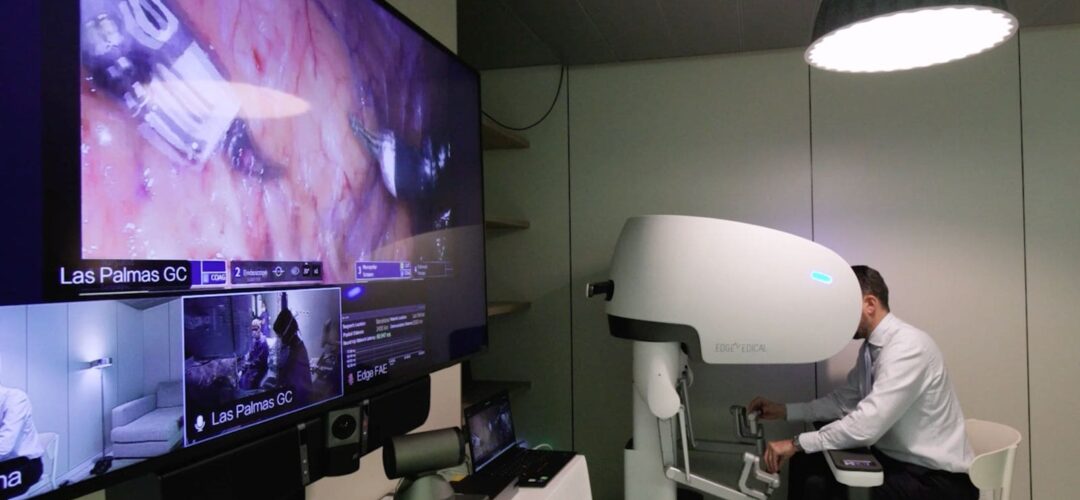
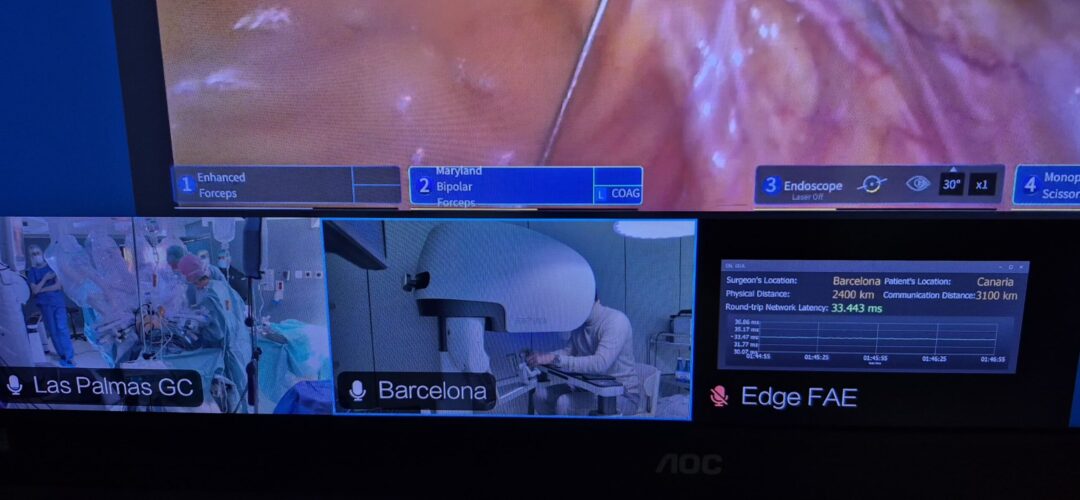
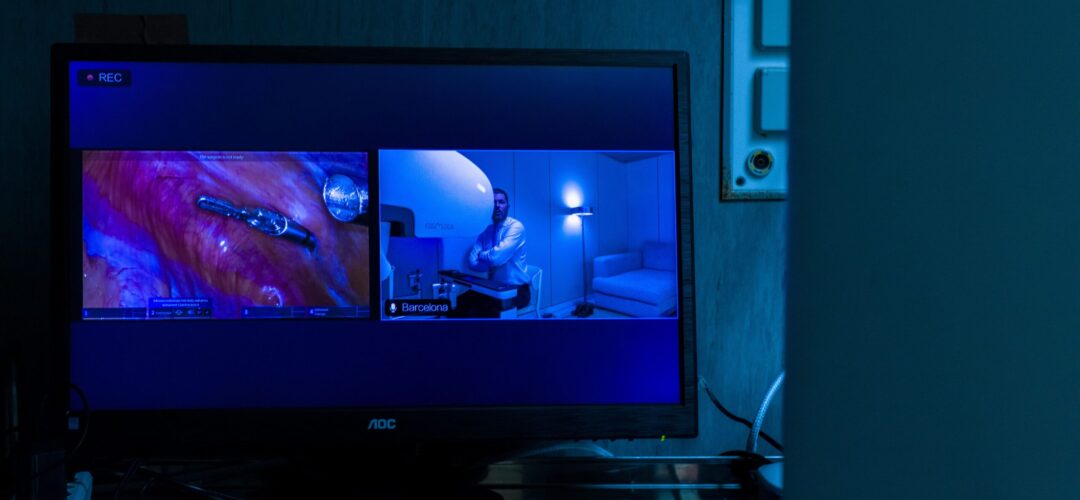
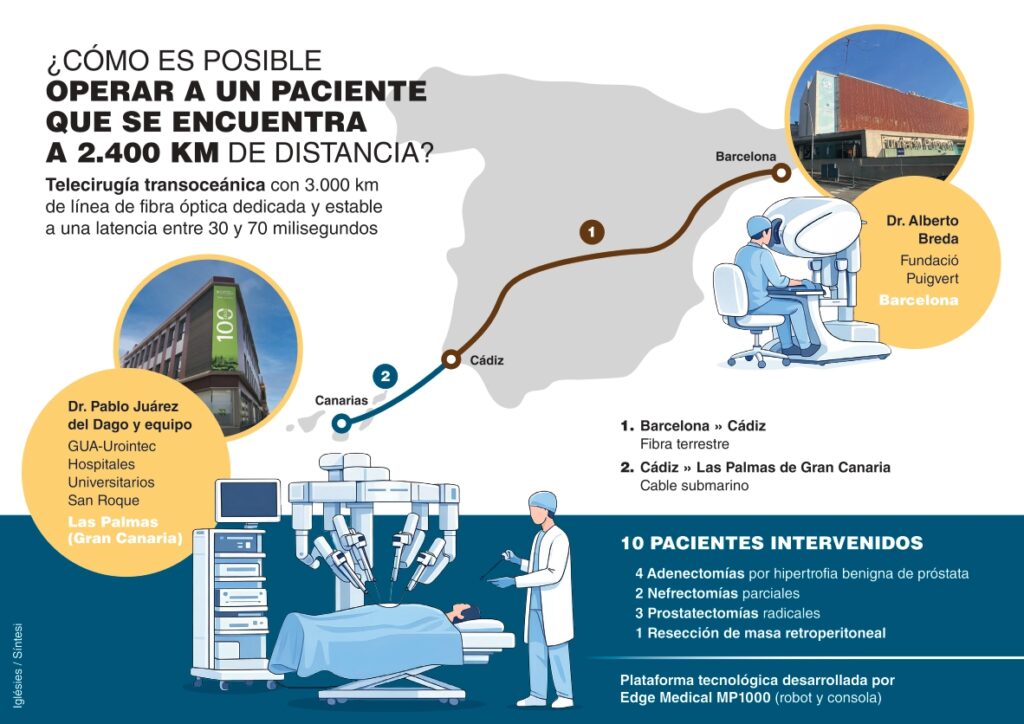
This model connects the surgeon operating from Barcelona in real time with the medical team attending to the patient in the Canary Islands. Thus, telesurgery is integrated into a real clinical setting, with coordination between centers and hospital care throughout the entire process.

Telesurgery allows a surgeon and a medical team to connect in real time to perform certain procedures using robotic surgery, even if they are in different locations. The technology does not replace the team caring for the patient; it enhances their work.

  • Remote surgery with coordination among teams.
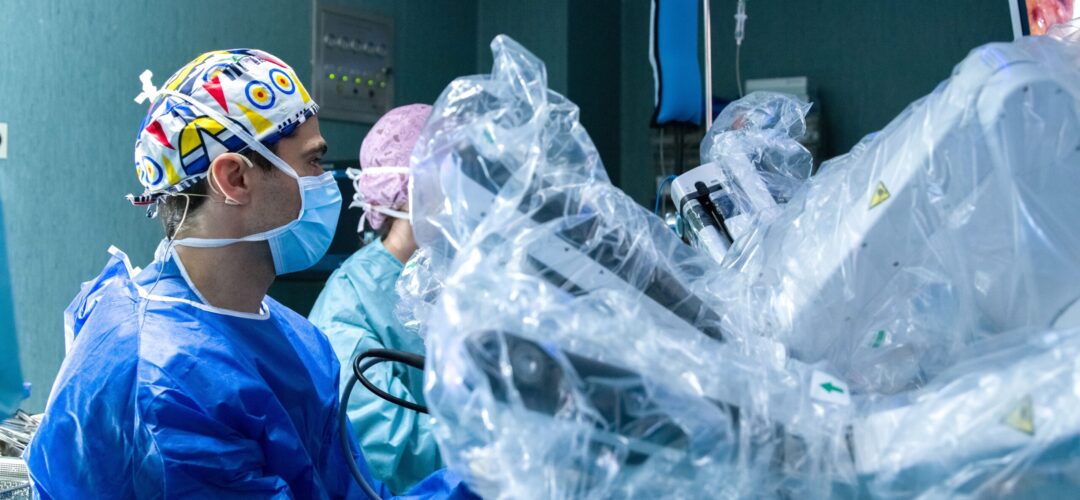
  • Local medical staff with the patient at the hospital.
  • Collaboration among schools during the intervention.
  • A stable infrastructure for safe and accurate operations.

A leading medical team


Behind this breakthrough lies much more than just technology: there is an experienced medical team, strong coordination, and a shared vision of robotic surgery. Telesurgery is only possible when the expertise of leading professionals is combined with the work of the team that supports the patient every step of the way.

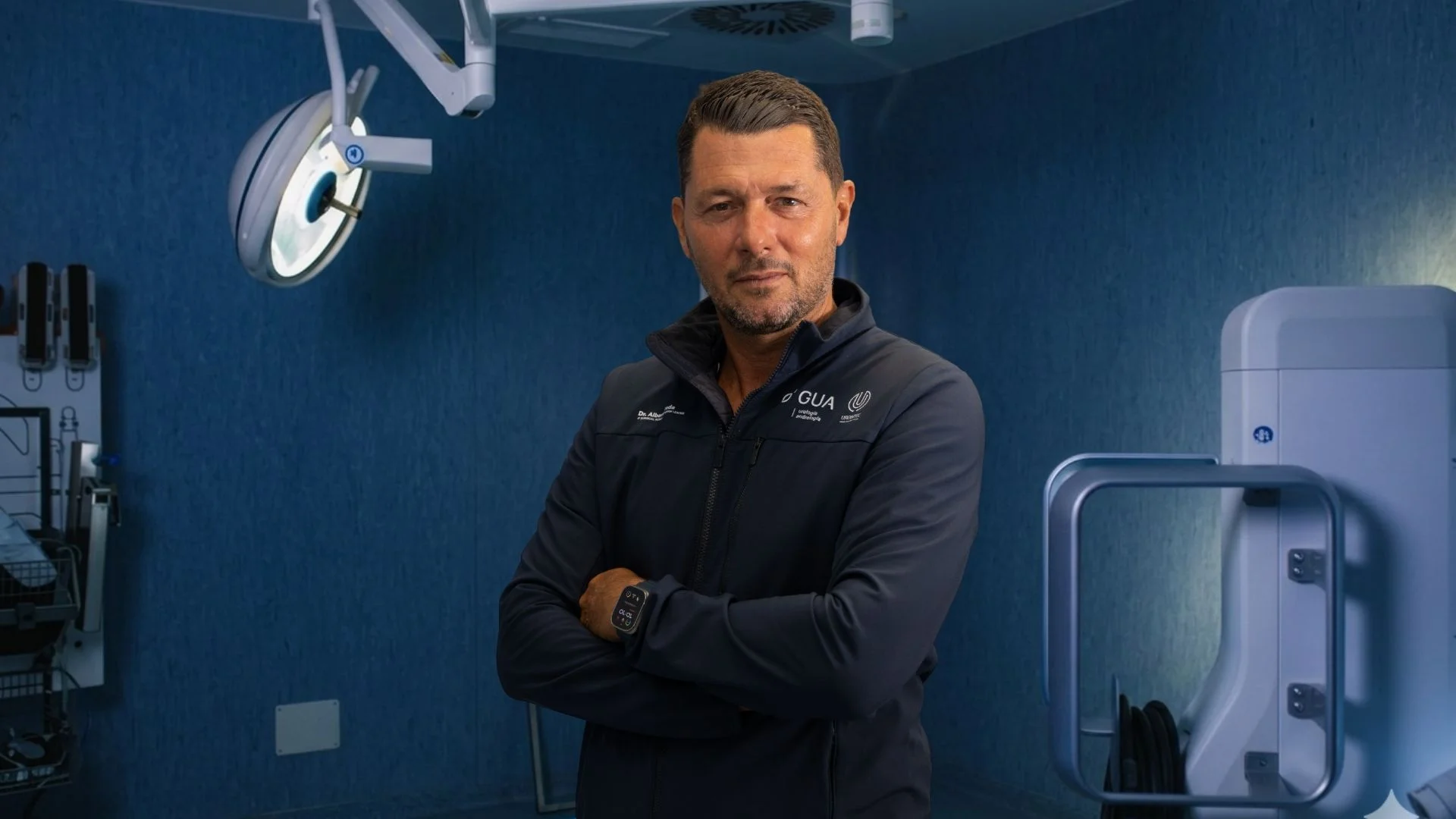
Dr. Alberto Breda

A urological surgeon and a leading European expert in robotic surgery. He serves as the clinical director of the telesurgery program in Barcelona and has championed its development as a practical model of care.

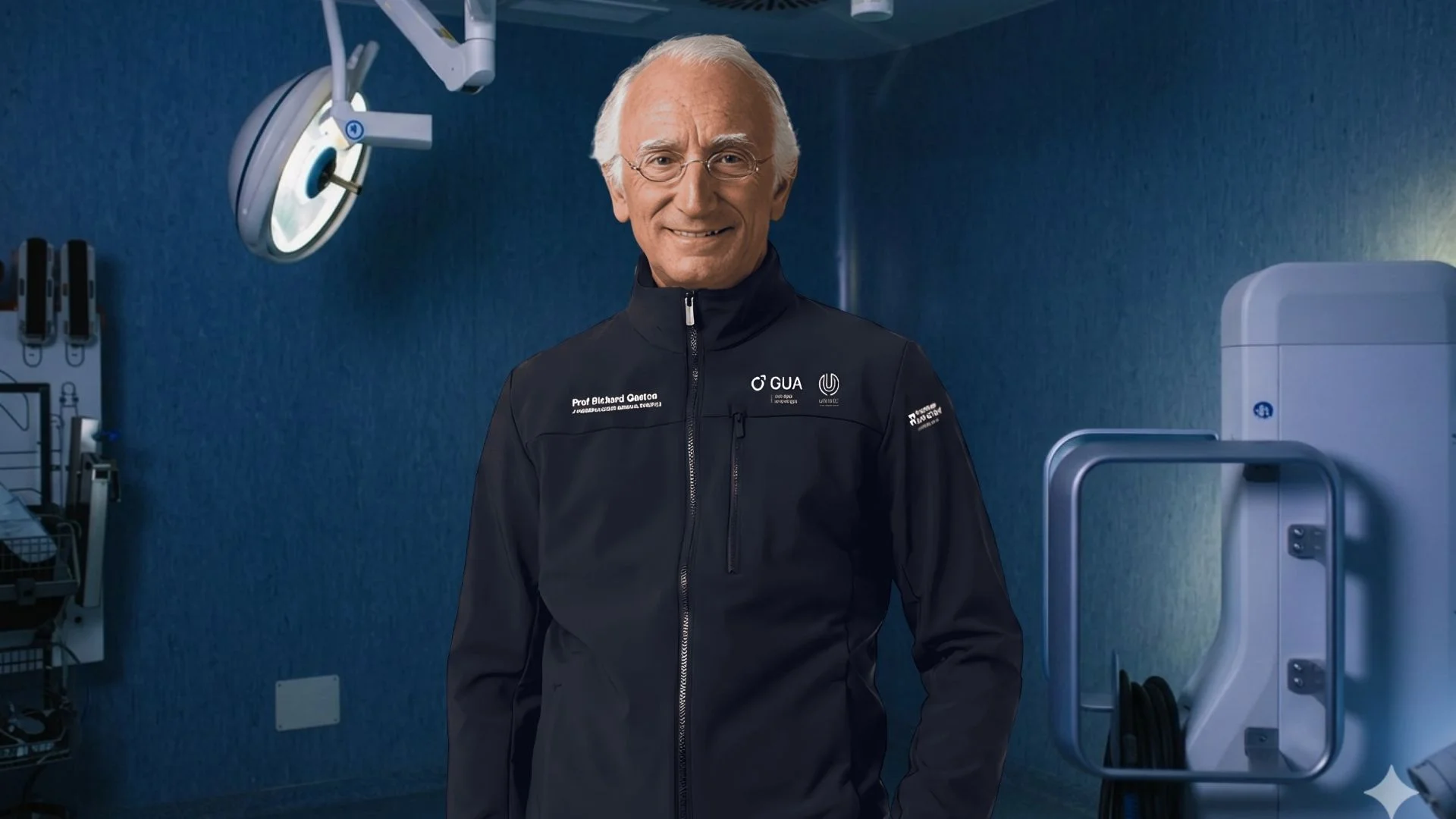
Dr. Richard Gaston

An international leader in minimally invasive and robotic urological surgery, and a contributor to research projects associated with Urointec.

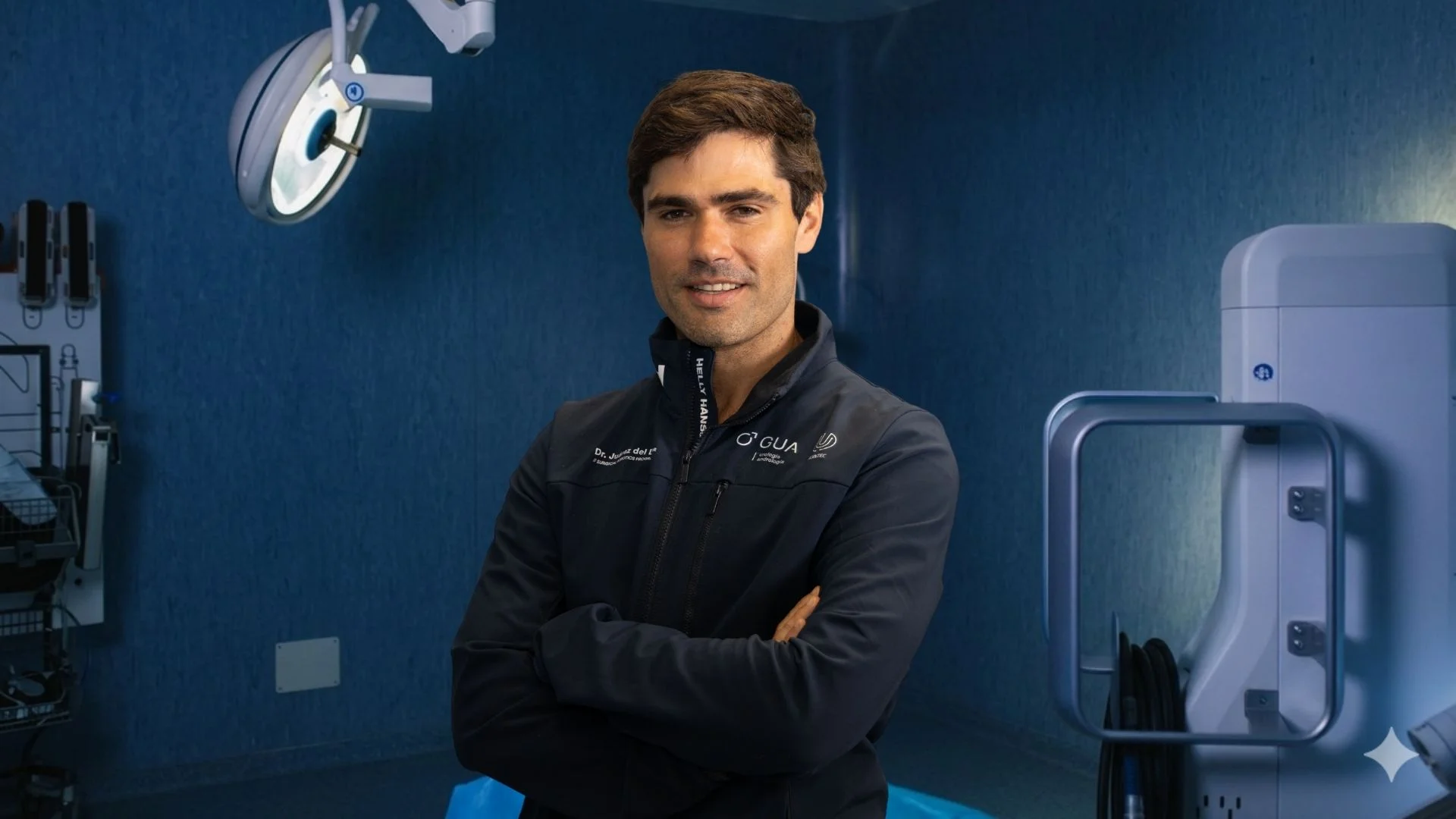
Dr. Pablo Juárez del Dago Anaya

A urologist specializing in robotic surgery and responsible for implementing the program in the Canary Islands. He coordinates the local surgical team and patient care at the hospital.

10 procedures performed

Ten procedures performed in a real-world clinical setting in February 2026

3,000 km connected

Barcelona and the Canary Islands are connected by a reliable telesurgery infrastructure.

30–70 ms average latency

Average latency recorded for stable real-time operation.

Patients discharged

Patients who underwent surgery have been discharged with a favorable prognosis and are making a smooth initial recovery.

Would you like to know if this model applies to your situation?


Our team can guide you, answer your questions, and assess your situation on a case-by-case basis. Telesurgery only makes sense when it translates

provides real benefits for the patient and is backed by full clinical guarantees.

Contact us at

Please provide your contact information, and our team will get in touch with you to assist you.