


Cirugía Prostática Láser
+2.000
Laser procedures
+1.000
Projects in 2025
24h
Hospital discharge
<0,5%
Risk of incontinence
Understanding the problem
What is benign prostatic hyperplasia?
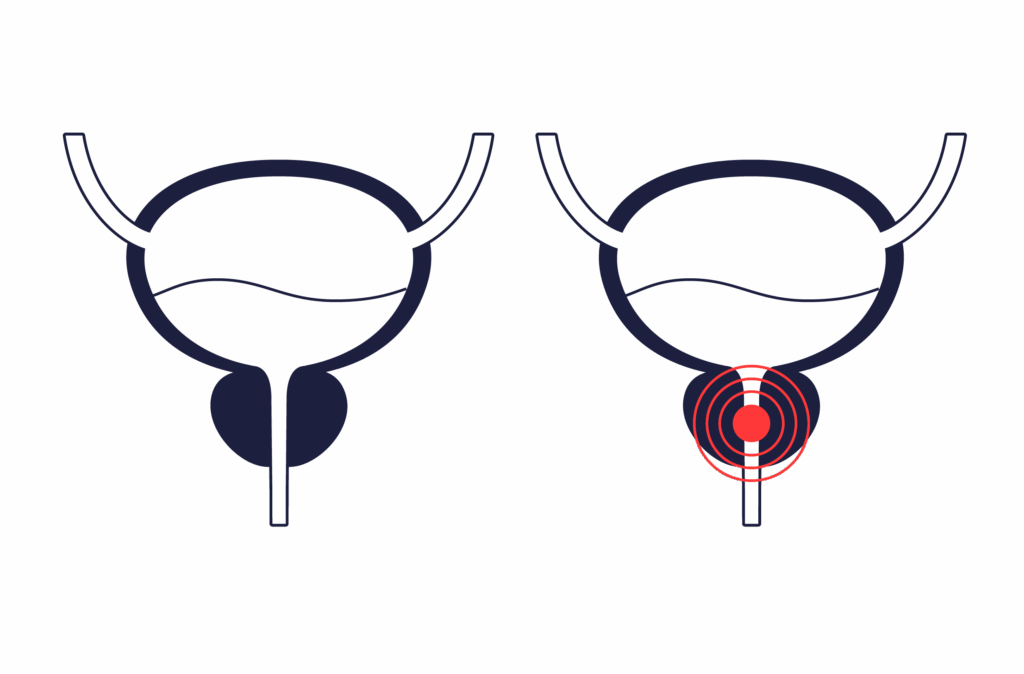
BPH is a very common condition in men over the age of 50. The prostate enlarges and compresses the urethra, causing frequent urination (including at night), a weak urine stream, a feeling of incomplete emptying, and even the need for a urinary catheter.
It is initially managed with medication, but between 20% and 30% of patients will require surgery to permanently resolve their symptoms.
The HoLEP procedure allows these symptoms to be treated without incisions, with minimal discomfort and a very quick recovery.
The solution
Holmium laser enucleation of the prostate (HoLEP)
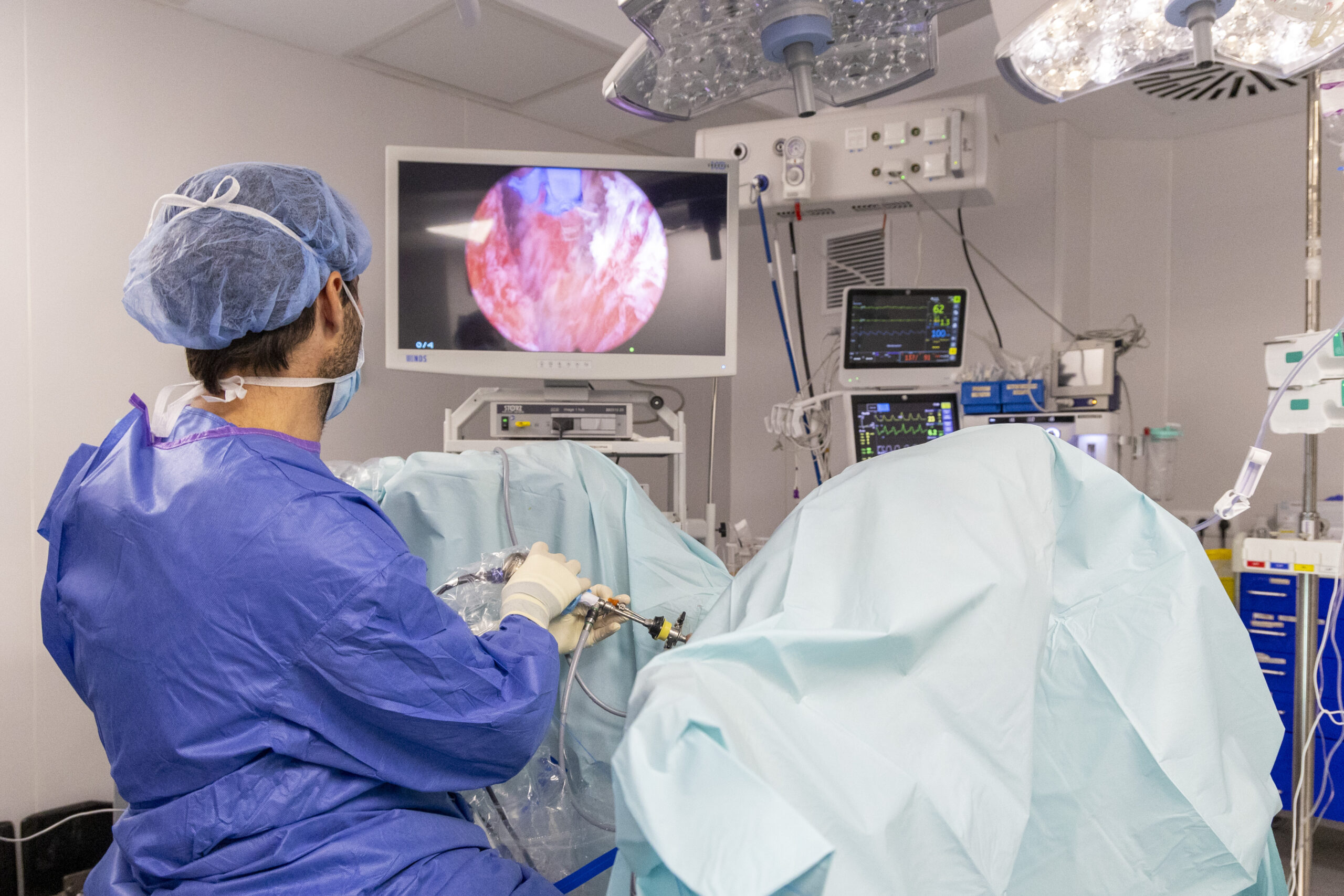
The procedure is performed through the urethra, without any incisions. The holmium laser completely separates the adenoma from the prostate capsule—much like separating the segments of an orange from its peel—and a morcellator removes the fragments.
All tissue is sent for pathological analysis, which helps rule out the possibility of hidden prostate cancer. There is no size limit: prostates weighing between 20 and 500 grams can be operated on.
A 160% increase in prostate laser therapy between 2024 and 2025. HoLEP is establishing itself as the gold standard, replacing conventional methods such as vaporization.
Why choose this technique?
Benefits of HoLEP for the patient
Complete removal of the tissue
Unlike vaporization or TURP, HoLEP removes the entire prostate adenoma. This provides more lasting results and allows the tissue to be analyzed to rule out hidden cancer.
Suitable for any prostate size
From 20 to 500 grams. It is the only technique with no limit on prostate volume, making it the most versatile option for all types of patients.
Compatible with anticoagulants
It can be performed on patients taking anticoagulant medication, with cardiac prostheses, or with other coagulation disorders, provided they follow a supervised preparatory protocol.
Back to normal life in a few days
The catheter is removed in 1–2 days; patients can return to work within a week and resume sports activities in 10–15 days. Since there are no incisions, recovery is significantly faster than with other techniques.
A team with more than 2,000 laser procedures performed
Steady growth year after year. More than 1,000 procedures in 2025 alone.
Comparison
HoLEP vs. Other Techniques
| HoLEP (Holmium Laser) | Prostate RTU | KTP Vaporization | |
|---|---|---|---|
| Prostate size | 20–500 g | Up to 80 g | Up to 80–100 g |
| Hospital discharge | 24 hours | 2–3 days | 1–2 days |
| Incontinence | <0,5 % | 1–3% | 1–2% |
| Anticoagulants | Compatible | Limited | Limited |
| Tissue analysis | Yes (rules out cancer) | Midterm | No |
| Back to Work | 7 days | 2–3 weeks | 1–2 weeks |
We're here to answer your questions
Frequently asked questions
Take the first step toward a symptom-free life
Contact our team. We’re here to assist you with clear information, a friendly approach, and the expertise gained from over 2,000 laser procedures.
